 The Reset House
Red Light Therapy Wavelengths Explained: What 630, 660, 810, 830 and 850 nm Actually Mean
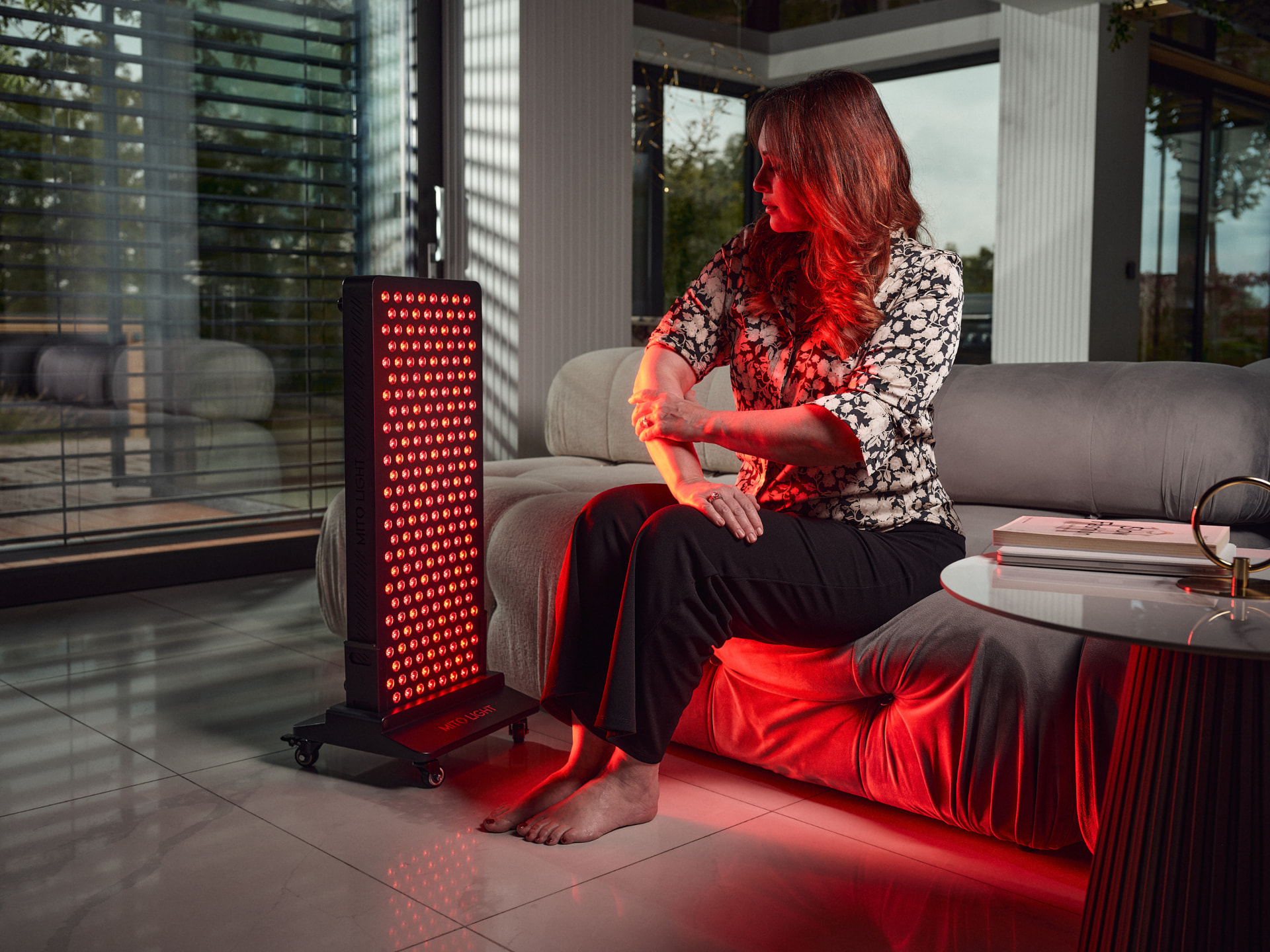
Shop for a red-light therapy panel and the specifications quickly become a string of numbers: 630 nm, 660 nm, 810 nm, 830 nm, 850 nm. Some panels offer two wavelengths; newer systems may offer four, six or more.
It is tempting to treat that number as a score. It is not.
A wavelength simply describes the distance between peaks in a light wave, measured in nanometres (nm). In photobiomodulation — the scientific term commonly used for exposing tissue to low-intensity red or near-infrared light — wavelength matters because different wavelengths are absorbed and scattered differently by tissue. But wavelength is only one part of the dose. Irradiance, distance, exposure time, treatment area and the design of the device matter too.
That distinction is useful when comparing home panels: the aim is not to find the panel with the longest specification sheet. It is to understand what those specifications are actually telling you.
First: red light and near-infrared light are not the same thing
The wavelengths commonly used in home photobiomodulation devices sit broadly in two bands.
Red light is visible to the eye. Common home-device wavelengths include roughly 630–670 nm. Near-infrared (NIR) sits beyond visible red, so you cannot see the NIR component even when it is switched on. Common device wavelengths include roughly 810–850 nm.
A review of photobiomodulation parameters notes that shorter wavelengths in the 600–700 nm range are generally used for more superficial targets, while longer wavelengths around 780–950 nm are favoured when greater tissue penetration is desired. That does not mean a specific wavelength automatically produces a specific result; tissue type, dose and device parameters still matter.
630 nm: towards the shorter end of common red-light panels
630 nm is visible red light and sits in the more superficial part of the range commonly used by LED photobiomodulation devices. For a buyer, the useful takeaway is not that "630 nm equals skin" as an absolute rule, but that it belongs to the red-light group that interacts more superficially than the near-infrared wavelengths discussed below.
Explore the MITO LIGHT Starter 5.0 — use code RESETHOUSE5 for 5% off.
660–670 nm: the familiar red-light range
660 nm is one of the wavelengths you will see repeatedly on red-light panels and in photobiomodulation research. 670 nm sits very close to it. Both remain visible red light.
The difference between 660 and 670 nm should not be interpreted as two completely different therapies. They are neighbouring wavelengths within the same broader red band. A multi-wavelength device can use both to broaden its spectral output, but the presence of an extra 10 nm option is not, by itself, proof that one panel will outperform another.
810 nm: near-infrared begins to change the conversation
810 nm is invisible near-infrared light and is widely represented in photobiomodulation research. Because near-infrared wavelengths generally penetrate further than visible red wavelengths, they are frequently studied when the intended target lies deeper than the surface.
The important word is generally. Penetration is not a fixed depth printed on a wavelength label. Skin, tissue composition, pigmentation, angle, distance and the optical properties of the device all influence how much light ultimately reaches a target.
Explore the MITO LIGHT Expert 5.0 — use code RESETHOUSE5 for 5% off.
830 nm: another well-studied NIR neighbourhood
830 nm is also near-infrared and sits close to 810 nm. As with 660 and 670 nm, buyers should be wary of marketing that presents neighbouring wavelengths as if each were a completely separate treatment category.
A panel containing 810 and 830 nm may provide a broader NIR spectrum, but you still need to look at how the device delivers that light.
850 nm: common, invisible and not automatically "stronger"
850 nm is perhaps the most familiar NIR number in consumer red-light devices. Its higher wavelength number does not mean it is simply a stronger version of 810 nm. Wavelength describes the light, not the amount of light delivered.
That distinction matters because "850" can sound superior to "810" when products are compared on a spec sheet. In practice, the appropriate wavelength depends on the intended application and the complete dosing parameters.
Explore the MITO LIGHT Biohacker 5.0 — use code RESETHOUSE5 for 5% off.
So is a six-wavelength panel better than a two-wavelength panel?
Not necessarily.
More wavelengths can give a device broader spectral coverage. That may be attractive if you want both visible red and NIR in one setup. But wavelength count alone tells you surprisingly little about the actual session.
A useful comparison should also consider irradiance (power delivered per unit area), distance from the panel, exposure time, coverage area, beam angle, whether red and NIR can be controlled separately, and whether the manufacturer clearly reports how its measurements were taken.
This is also why "maximum power" is a poor shortcut for choosing a panel. Photobiomodulation research describes a biphasic dose response: more light is not necessarily better indefinitely. Both insufficient and excessive dosing can be less effective than an appropriate middle range. The practical implication for a home buyer is simple: controllability and transparent instructions can be more useful than chasing the largest number on the box.
A real-world example: MITO LIGHT Generation 5.0
MITO LIGHT is one example of how newer home systems are moving beyond the traditional two-wavelength specification. Its current Generation 5.0 panels use six wavelengths: 630, 660 and 670 nm red light plus 810, 830 and 850 nm near-infrared.
That makes the range useful as an example of what "multi-wavelength" actually means: it combines neighbouring wavelengths across both the visible-red and NIR bands rather than introducing six entirely different treatment categories.
The current Starter 5.0, for example, lists all six wavelengths, 112 LEDs, red/NIR/combined modes and intensity adjustment. MITO reports irradiance at 15 cm using two different instruments — 74 mW/cm2 by spectrometer and 130 mW/cm2 by Solarmeter — which also illustrates an important shopping lesson: irradiance figures from different measurement methods should not automatically be compared as though they were identical.
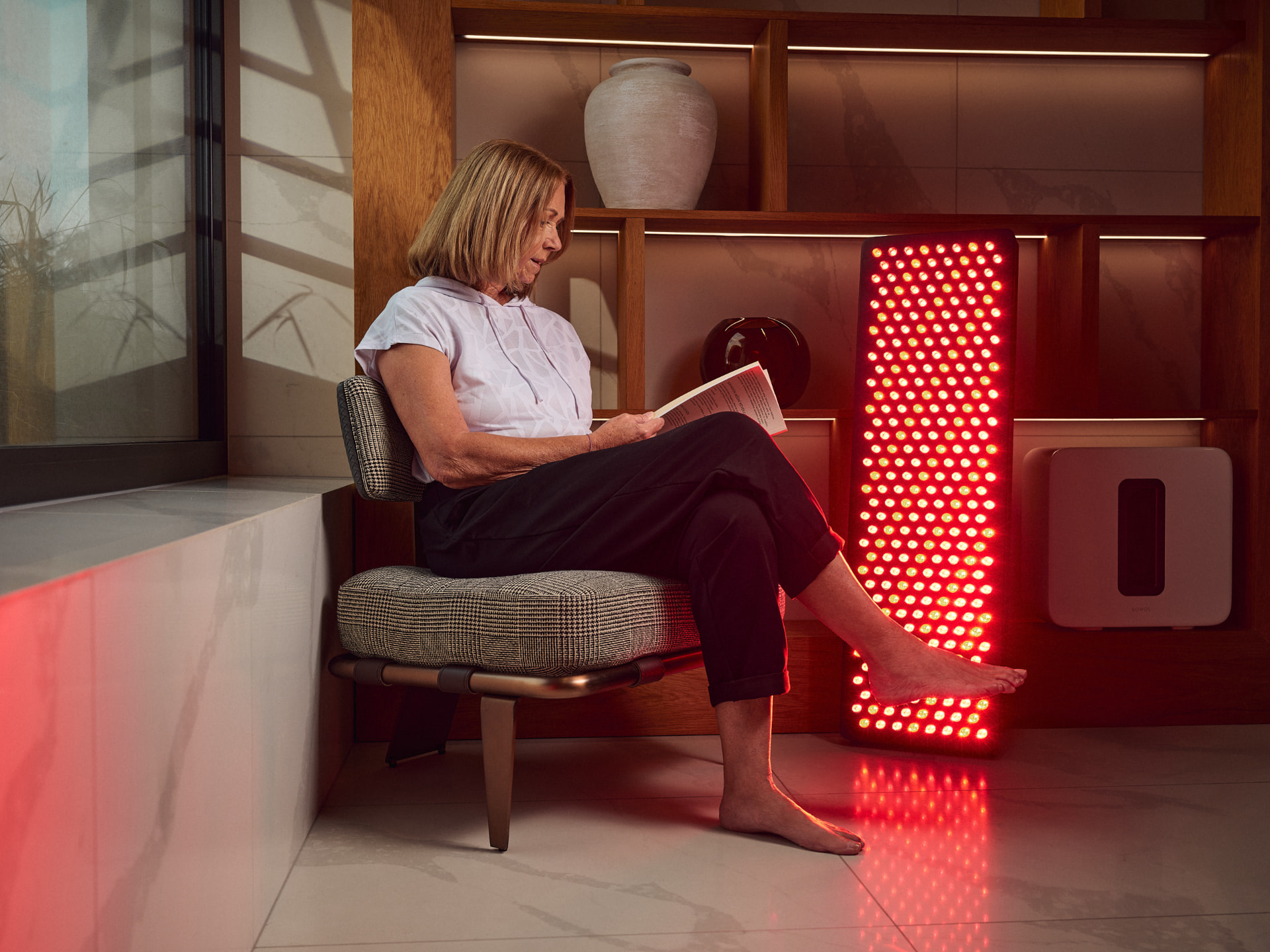
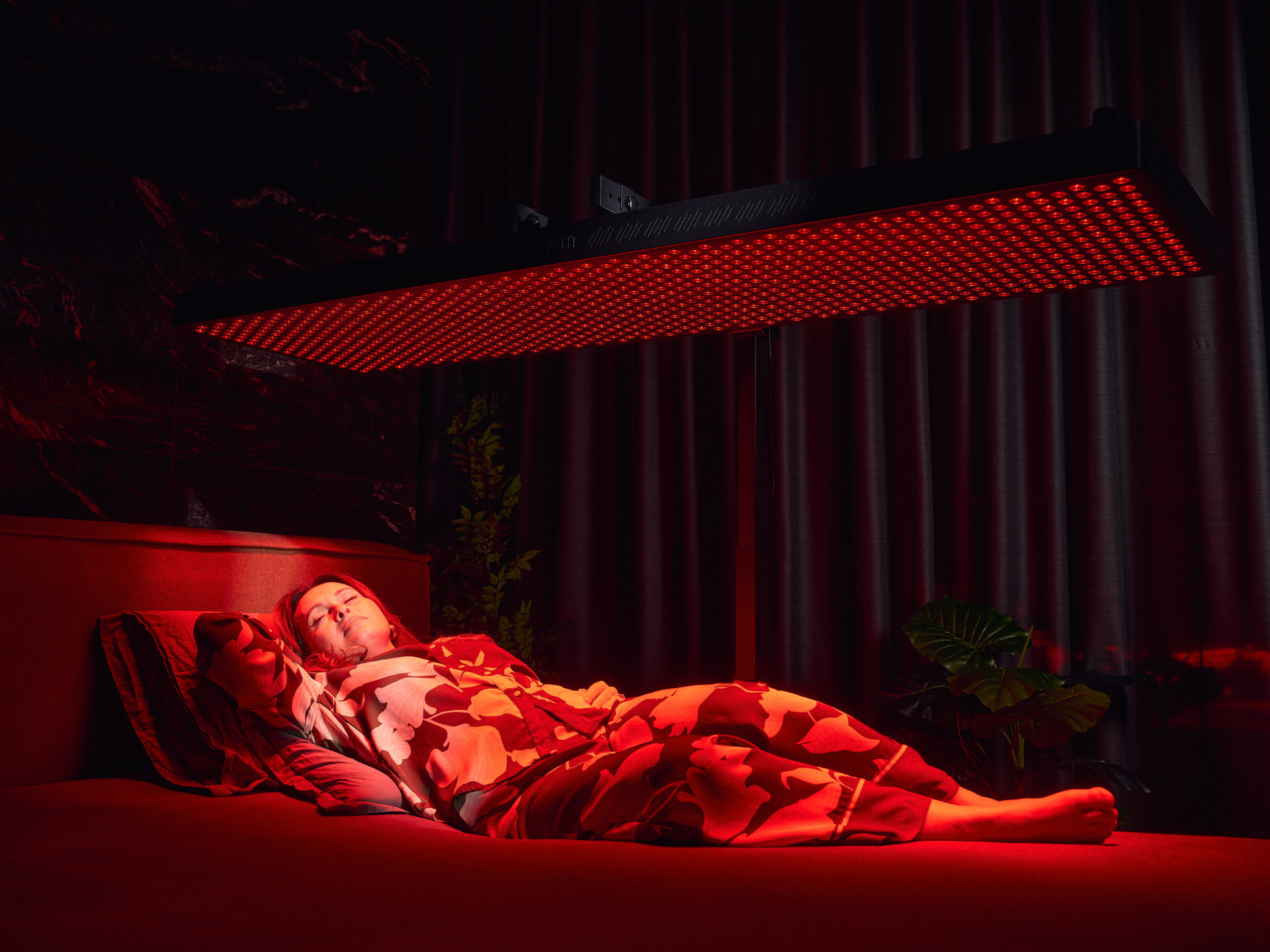
For larger coverage, the current Expert 5.0 uses the same six wavelengths with 208 LEDs and a 74.5 × 30.5 cm panel. At the other end of the range, the Master 5.0 is a 183 × 53 cm full-body panel with 990 LEDs. The wavelengths stay the same; what changes substantially is coverage, output, physical size and power consumption.
Explore the MITO LIGHT Master 5.0 — use code RESETHOUSE5 for 5% off.
That is precisely why buying by wavelength count alone misses the point.
What should you compare before buying a red-light panel?
- 1. Wavelength mix. Does it include visible red, NIR or both?
- 2. Coverage. Are you treating a small area, torso-sized area or trying to illuminate most of the body at once?
- 3. Irradiance — and how it was measured. A number without distance and measurement method is difficult to compare meaningfully.
- 4. Distance. Irradiance changes as you move away from the panel, so check the distance used for the published specification and the manufacturer's recommended setup.
- 5. Control. Can you select red, NIR or combined light? Can intensity be adjusted?
- 6. Practical setup. Check dimensions, weight, mounting or stand requirements and the space needed to use the device comfortably.
- 7. Electrical compatibility and certification. For UK homes, check the manufacturer's UK specification, plug/voltage requirements and relevant conformity information rather than assuming an imported panel is identical to the UK version.
The Reset House view
The useful question is not "Which wavelength is best?" It is "What am I trying to illuminate, and how does this device deliver light to that area?"
For a small, targeted setup, an enormous full-body panel may add cost and take up space without solving a real problem. For someone who wants broad coverage in a dedicated home wellness room, repeatedly repositioning a tiny device may be equally impractical.
Start with coverage and intended use. Then look at the wavelength mix, dosing information, controls and physical setup. The numbers begin to make much more sense once they are attached to the way you will actually use the device.
FAQ
Is 660 nm better than 630 nm?
Not in a universal sense. Both sit in the visible-red range used in photobiomodulation. Their absorption characteristics differ, but device dose, target and protocol matter alongside wavelength. Treating one number as inherently superior oversimplifies the science.
Is 850 nm stronger than 810 nm?
No. A larger wavelength number does not mean greater power. 810 and 850 nm are both near-infrared wavelengths. Irradiance describes power density; wavelength describes the light's spectral position.
Can you see near-infrared light?
No. Near-infrared is outside the visible spectrum. A combined panel can therefore be emitting NIR even though the visible red LEDs are what your eyes perceive.
Should I use red and near-infrared together?
Many consumer panels allow red, NIR or combined operation. Whether combined exposure is appropriate depends on the device, intended use and protocol. Follow the manufacturer's instructions rather than assuming every setting needs to be run at maximum intensity.
Does more irradiance mean a better panel?
Not automatically. Irradiance is only one dosing variable, and photobiomodulation has a dose-response relationship. Distance, exposure time, wavelength and target also matter. Compare figures only when the measurement conditions are clear.
The Reset House may earn a commission when you shop through selected partner recommendations. Use code RESETHOUSE5 for 5% off eligible MITO LIGHT purchases.
Editorial note: This guide is educational and is not medical advice. It intentionally avoids promising that a consumer light device will diagnose, treat or cure a medical condition.