 The Reset House
How to Turn a Garden Room Into a Home Wellness Studio
This article contains affiliate links. If you purchase through selected links, The Reset House may earn a commission at no additional cost to you. Some partners may also provide a reader discount where stated. Editorial selection remains independent.
A garden room can be much more than an office at the end of the lawn. With the right layout, insulation and equipment, it can become one of the most useful wellness spaces in the home: somewhere to move before work, step onto a reformer without travelling to a studio, train in privacy, or build a quiet recovery ritual at the end of the day.
The most successful spaces do not try to recreate a commercial gym or spa. They are designed around the routines you will actually use.
Here is how to approach a garden wellness studio — from the shell itself to Pilates, strength, yoga and recovery.
Start with the room, not the equipment
Before choosing a reformer or a rack of weights, consider what the room needs to do throughout the year.
For a wellness space in a UK garden, year-round comfort matters. Insulation, heating, ventilation, electrical provision and glazing will influence how often the room gets used far more than decorative details.
Consider:
- Insulation and temperature control. A space intended for early mornings and winter evenings needs to feel comfortable beyond summer.
- Ventilation. Particularly important for strength training, cardio and warmer movement sessions.
- Flooring. The ideal surface for yoga is not necessarily the same as the ideal surface beneath free weights.
- Electricity. Plan sockets around equipment, lighting and recovery technology before deciding where everything will sit.
- Natural light and privacy. Large glazing can make a small studio feel generous, but consider blinds or screening if the room faces neighbouring properties.
- Clear floor space. Resist filling every wall. Negative space is useful space in a wellness room.
The aim is not to fit the maximum amount of equipment into the room. It is to create enough room for the way you want to move.
Choosing the garden studio
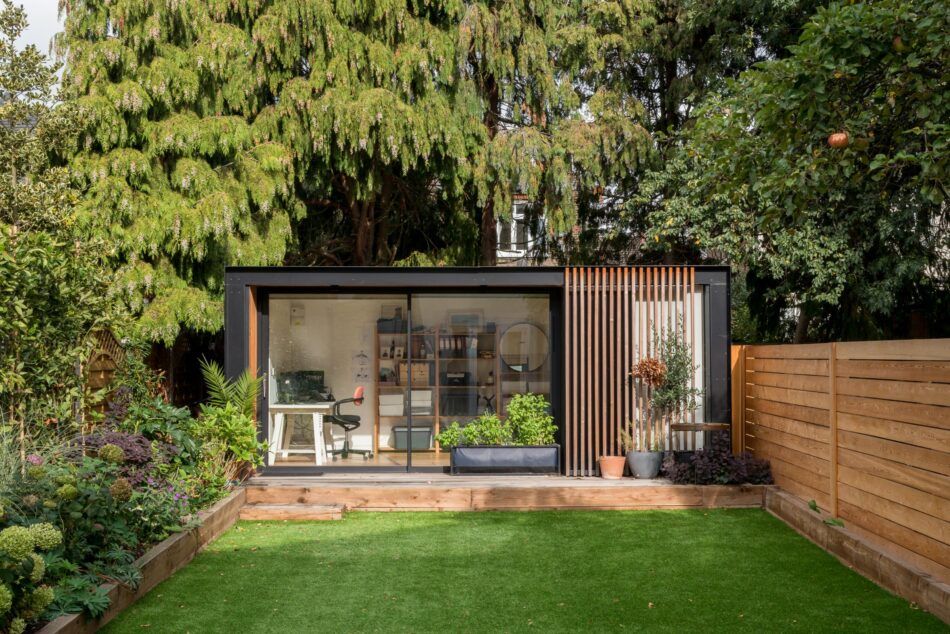
For this edit, we selected four rooms from Tiger Sheds, each suited to a slightly different type of wellness setup.
Tiger Modular Certus — the versatile option
The Tiger Modular Certus works particularly well when the room needs to accommodate more than one routine — for example Pilates alongside strength training, or a reformer with an open mat area.
Tiger Modular Verso — for a light-led studio
The Tiger Modular Verso is the more design-led choice in this edit, with a format that lends itself naturally to a calm Pilates, yoga or movement studio. If the visual relationship between the room and garden matters as much as the equipment inside it, this is the direction we would explore.
Tiger Modular Nexus — when storage matters
A wellness room feels significantly calmer when equipment can disappear after a session. The Tiger Modular Nexus incorporates storage into the concept, making it particularly relevant for a multifunctional studio with mats, blocks, bands, smaller weights and other accessories.
Tiger Modular Mini — for smaller gardens
A dedicated wellness room does not necessarily need to be large. The Tiger Modular Mini is the compact option in the edit and can make sense for a focused setup — a yoga room, movement studio or simple recovery space — where keeping the footprint small is part of the brief.
1. The home Pilates studio
A reformer is substantial enough that it should determine the layout rather than be squeezed into whatever floor space remains.
Allow comfortable space around the machine so you can move on and off it easily and perform exercises that extend beyond the carriage. Keep a separate patch of clear floor for mat work, mobility and stretching.
A mirror can be useful, but an entire mirrored wall is not essential. In a residential setting, one well-positioned mirror often feels more considered.
For equipment, the FÔLD Reformer Bed is particularly interesting for homes because its design bridges dedicated Pilates equipment and a more space-conscious domestic setup.
Keep the rest restrained: a mat, a small set of props and concealed storage may be all the room needs.
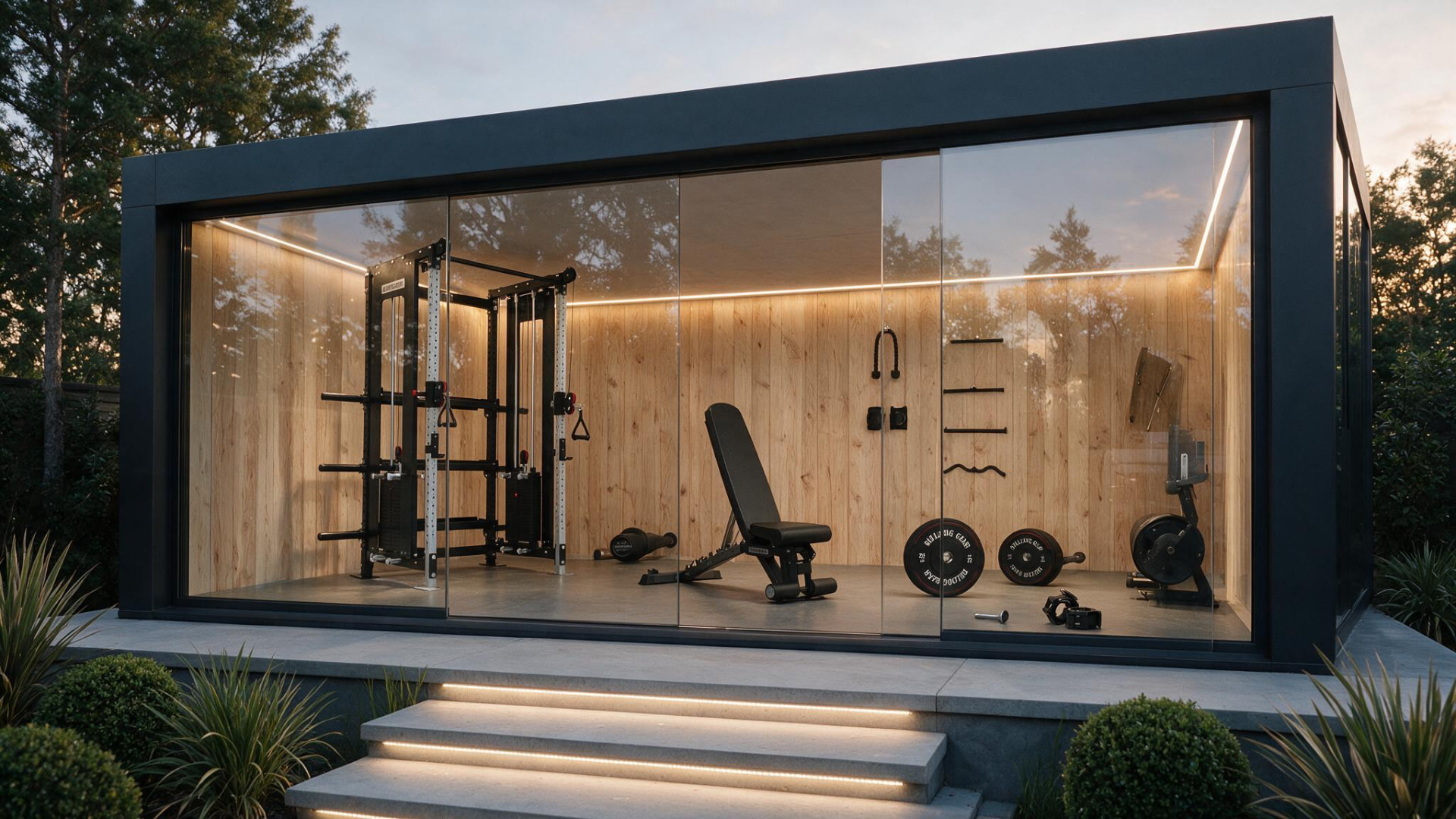
2. The private home gym
A garden gym should be designed around the training you actually do rather than a checklist of commercial-gym equipment.
For strength training, start with the movements that matter most to you and work backwards. Free weights, a bench and a compact selection of versatile equipment can create a more useful room than filling it with single-purpose machines.
Flooring becomes particularly important here. Protect both the equipment and the structure beneath it, and consider noise and vibration if you plan to train with heavier weights.
Ventilation and temperature control also deserve more attention in a gym than in a low-intensity yoga room.
For strength and functional-training equipment, explore Bulldog Gear rather than trying to source every piece from different suppliers.
3. The yoga and mindful movement studio
Yoga requires relatively little equipment, which makes the architecture of the room more noticeable.
Prioritise clear floor space, natural light, warmth and a sense of privacy. Instead of treating the room as somewhere to store fitness equipment, allow it to remain deliberately sparse.
A small storage unit can hold mats, blocks, straps and blankets so the floor can return to being almost empty after each session.
For mats and yoga accessories, Complete Unity Yoga fits naturally into this type of setup.
4. The recovery room
Not every wellness space needs to revolve around exercise.
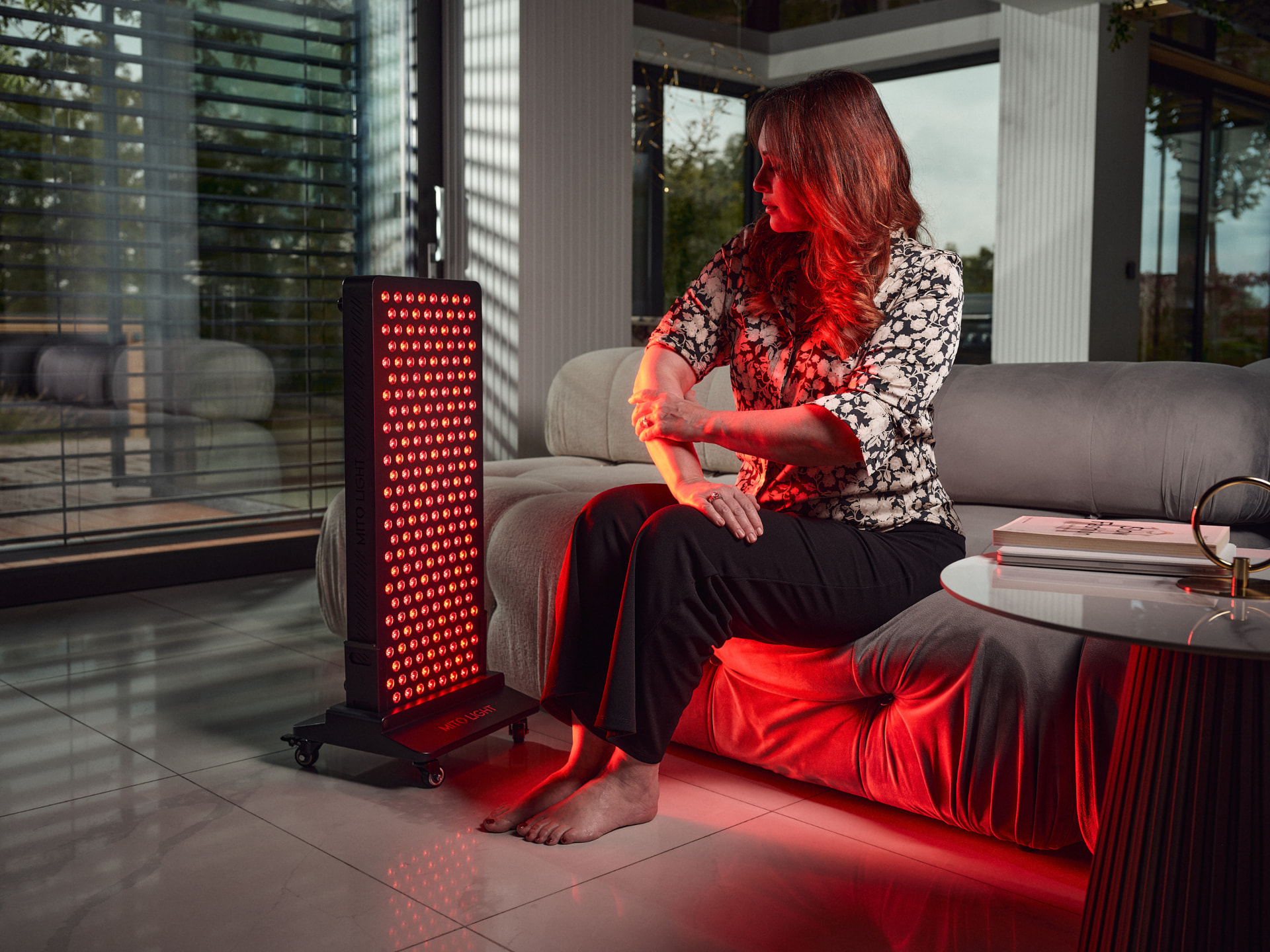
A garden studio can also create separation between everyday life and recovery — somewhere for stretching, breathwork, red light or a few quiet minutes without turning the bedroom or living room into another equipment zone.
For red and near-infrared light, MITO LIGHT panels can be incorporated into a dedicated recovery area.
The Reset House readers can use code RESETHOUSE5 for 5% off at MITO LIGHT UK.
For a smaller ritual, the Kiicity Smart Eye Massager can sit alongside the room’s softer recovery elements rather than becoming a permanent visual feature.
The point is not to collect recovery devices. Choose the rituals you genuinely use and give them a place to happen consistently.
Or combine them
For many homes, the most useful answer is not a Pilates studio or a gym or a recovery room.
It is one flexible room.
A reformer can occupy one side while a clear mat zone supports yoga and mobility. A compact strength setup can sit against another wall. Red light can become part of the post-training routine without requiring a separate room.
The key is visual hierarchy: decide what the room is primarily for, then allow secondary rituals to support it.
A Pilates-first room with recovery elements will usually feel more intentional than a room trying to look simultaneously like a Pilates studio, commercial gym, yoga shala and spa.
A few design decisions that make the room feel part of the home
The best garden wellness studios feel residential rather than commercial.
Use materials and finishes that relate to the main house. Keep storage closed where possible. Choose warm, layered lighting instead of relying solely on bright ceiling lights. Let equipment colours sit comfortably with the interior palette.
And leave some space empty.
That final point is easy to overlook. In wellness design, an unused square metre is not necessarily wasted space. It might be where you stretch tomorrow morning.
The Reset House view
A garden wellness studio is compelling because it removes friction. There is no commute, no need to reorganise the living room and no equipment permanently occupying a bedroom.
But the room only works if it reflects a real routine.
Start with the ritual you want to make easier — Pilates before work, strength training three times a week, evening yoga or a recovery routine — and design outward from there.