 The Reset House
What Sauna Sellers Don't Always Tell You
The Reset House may earn a commission from selected links in this article, at no additional cost to you.
You've probably scrolled through a dozen sauna listings by now. Four-person cabins, "authentic Finnish heat," free delivery banners. What you rarely get is the part that actually decides whether you'll use the thing three times a week for the next ten years, or let it sit half-used in the garden by autumn.
Here's what tends to get left out of the sales pitch.
The "seats 4" number is measured lying down, not sitting comfortably
Sauna capacity ratings come from a simple bench-space calculation: divide the total bench length by roughly 60cm per person. That's the width of a person seated with almost no room either side of them. It doesn't account for the fact that most people don't want to sit shoulder-to-shoulder with a stranger — or even a partner — in 80°C heat.
In practice, a cabin rated for four rarely feels comfortable for more than two adults sitting properly, with room to stretch or lie along the bench. If you're buying for a household of three or four who'll actually want to use it together, the honest move is to size up from whatever number you had in mind. It's a far cheaper mistake to catch before you buy than after.
The barrier you can't see is the one that decides how long it lasts
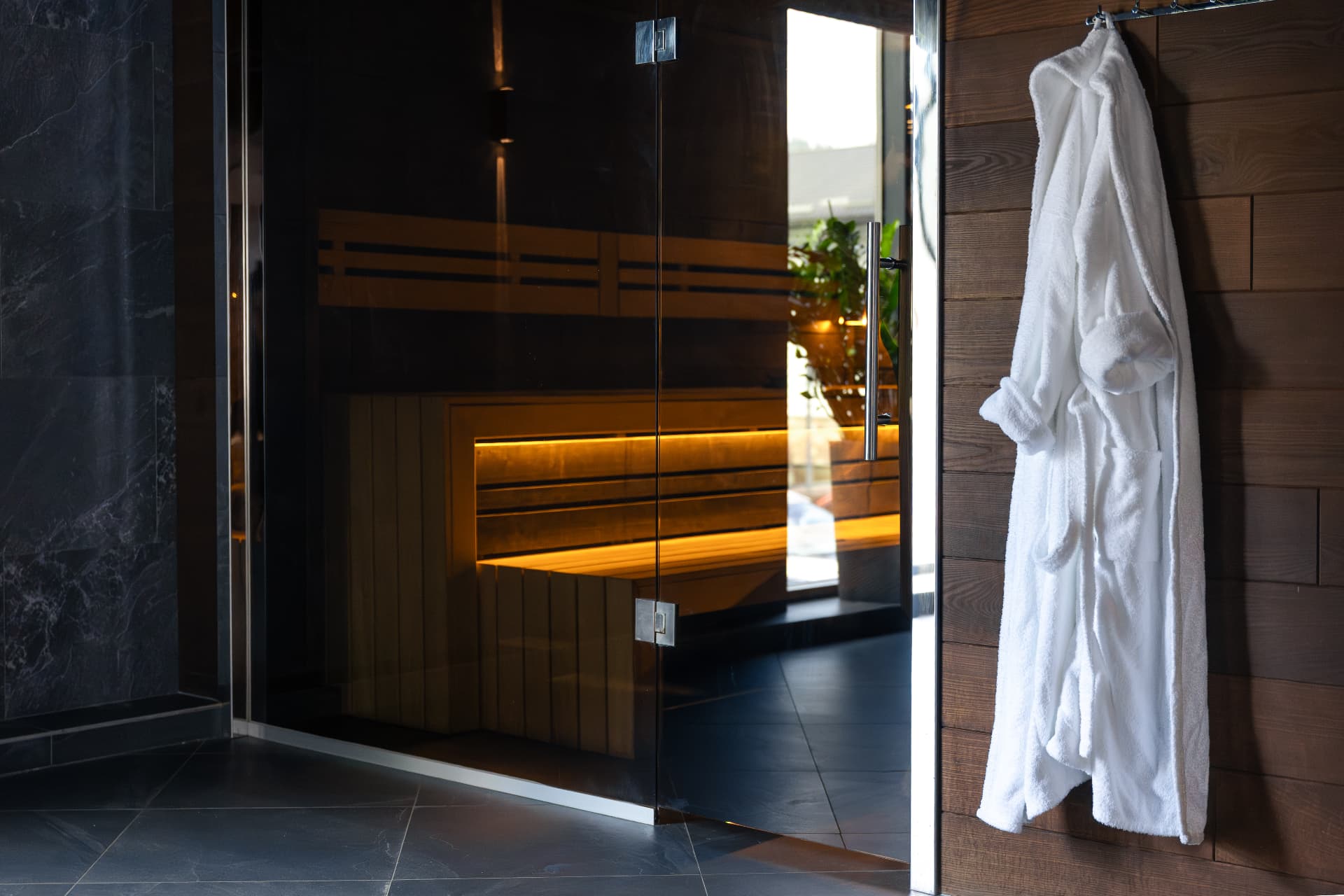
Underneath the timber, a well-built sauna has a vapour barrier — a layer, usually foil-faced, that stops warm moist air from pushing into the wall cavity and condensing inside the insulation. Skip it, or fit it badly, and moisture gets trapped where you can't see it. Over a few seasons that means mould, warped panels, and a structure that's quietly rotting from the inside while the outside still looks fine.
It's also one of the easiest things for a seller to gloss over, because it's invisible in every product photo. If a listing doesn't mention it, it's worth asking directly — a company that can answer confidently and specifically is usually one that took the build seriously.
"Cedar" on the label doesn't always mean what you think
Wood names on sauna listings are looser than most buyers assume. Western Red Cedar, Nordic Spruce, Hemlock and Basswood all show up under a sauna's bench, and they're not interchangeable — they differ in how much they resist moisture, how little they resin or knot, and how they smell (or don't) once they heat up. Cedar has a strong, resinous scent some people love and others find overpowering in a small enclosed room; Hemlock and Basswood are closer to neutral. None of these is objectively "better" — it depends on what kind of sauna experience you're actually after.
The catch is that "cedar" or "hemlock" on a listing doesn't always specify which species, which grade, or which part of the tree, and pricing can vary a lot for wood that looks identical in a photo. If wood type matters to you — and for a room you'll sit in with bare skin, it should — it's worth asking the seller to confirm the exact species and grade before you commit.
Running costs depend more on the heater than the size
Two saunas of near-identical size can cost very different amounts to run, and the difference usually comes down to the heater, not the cabin. Electric heaters draw a fairly predictable amount of power per session and are the simplest to budget for. Wood-fired models cost little to run in electricity terms but ask for regular fuel, time, and upkeep. Infrared panels typically use less energy to reach a comparable feels-like heat, because they warm the body directly rather than heating the air in the whole room first — though the sensation is genuinely different from traditional steam heat, not just a cheaper version of it.
None of these is the "correct" choice — they suit different routines. Someone who wants a fast 20-minute reset after work will weigh this differently than someone planning a slow Sunday ritual. It's worth thinking about how often you'll realistically use it before choosing on price alone.
The health claims are real, but the confident-sounding ones deserve a second look
Heat exposure does trigger measurable things in the body — heat shock proteins that help repair cellular stress, a rise in BDNF linked to mood and brain health, and a well-known Finnish cohort study that found more frequent sauna use associated with lower cardiovascular mortality over years of follow-up. That's genuinely interesting, and it's part of why sauna use has outlasted every wellness trend around it.
What's worth being sceptical of is any listing that turns "associated with" into "proven to cure." Most of the research is observational — it shows a pattern, not a guaranteed personal outcome. The honest version of the pitch is that regular heat exposure is a well-evidenced habit worth building, not a medical treatment. That's a lower bar, and also a truer one.
Where this leaves you
None of this is a reason to avoid buying a sauna — it's the opposite. Knowing what's usually left out is exactly what lets you compare listings properly instead of choosing on price and photos alone. If you're ready to start comparing options, Steam & Oak is a good place to see what a well-specified UK sauna looks like — from indoor and outdoor designs to different heater and timber options.
Explore Steam & Oak Saunas