 The Reset House
Indoor vs Outdoor Saunas: The Decision Most People Get Wrong
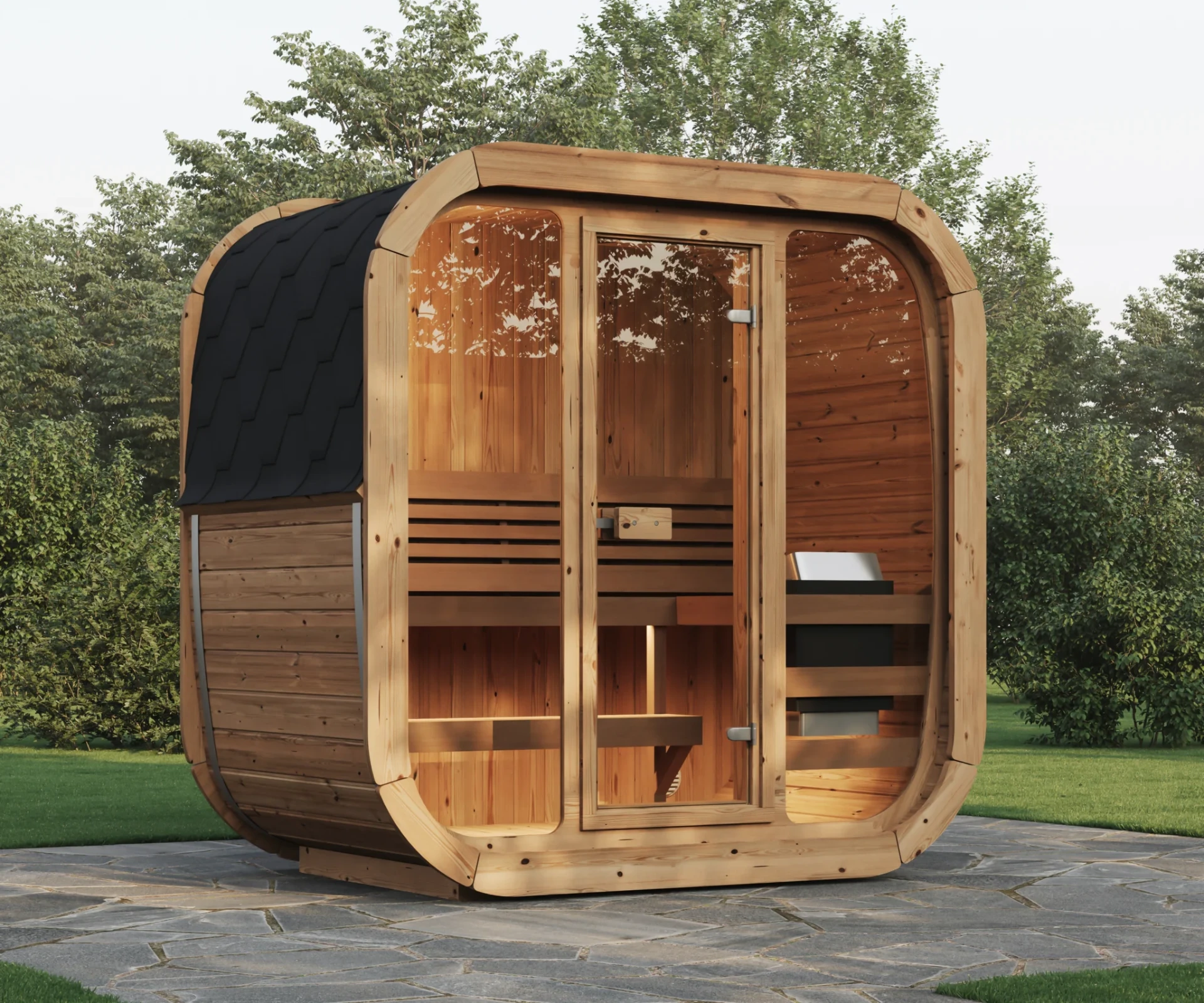
The Reset House may earn a commission from selected links in this article, at no additional cost to you.
Most people choose between an indoor and an outdoor sauna based on where they happen to have space.
That's a reasonable starting point, but it skips the part that often matters more in the long run: the two aren't simply the same sauna placed in different locations.
They heat differently, face different construction demands and create very different routines.
The better question isn't just where can I put one?
It's how do I actually want to use it?
It's not really about space — it's about how the heat cycles
An indoor sauna sits within an environment that's already protected from the weather and usually starts from a warmer baseline. That can mean more predictable heat-up times and less exposure to changing outdoor temperatures.
An outdoor sauna has a different job.
In winter, the cabin itself may be starting close to outdoor temperature, so insulation, heater sizing, glazing and overall construction become particularly important. A well-built outdoor sauna is designed around those conditions rather than simply being an indoor cabin placed outside.
This becomes especially noticeable during a British winter.
If your sauna is intended to be part of a quick evening routine, the time and effort between deciding to use it and actually sitting inside matters more than specifications on paper might suggest.
The best sauna is ultimately the one that fits naturally enough into your routine that you keep using it.
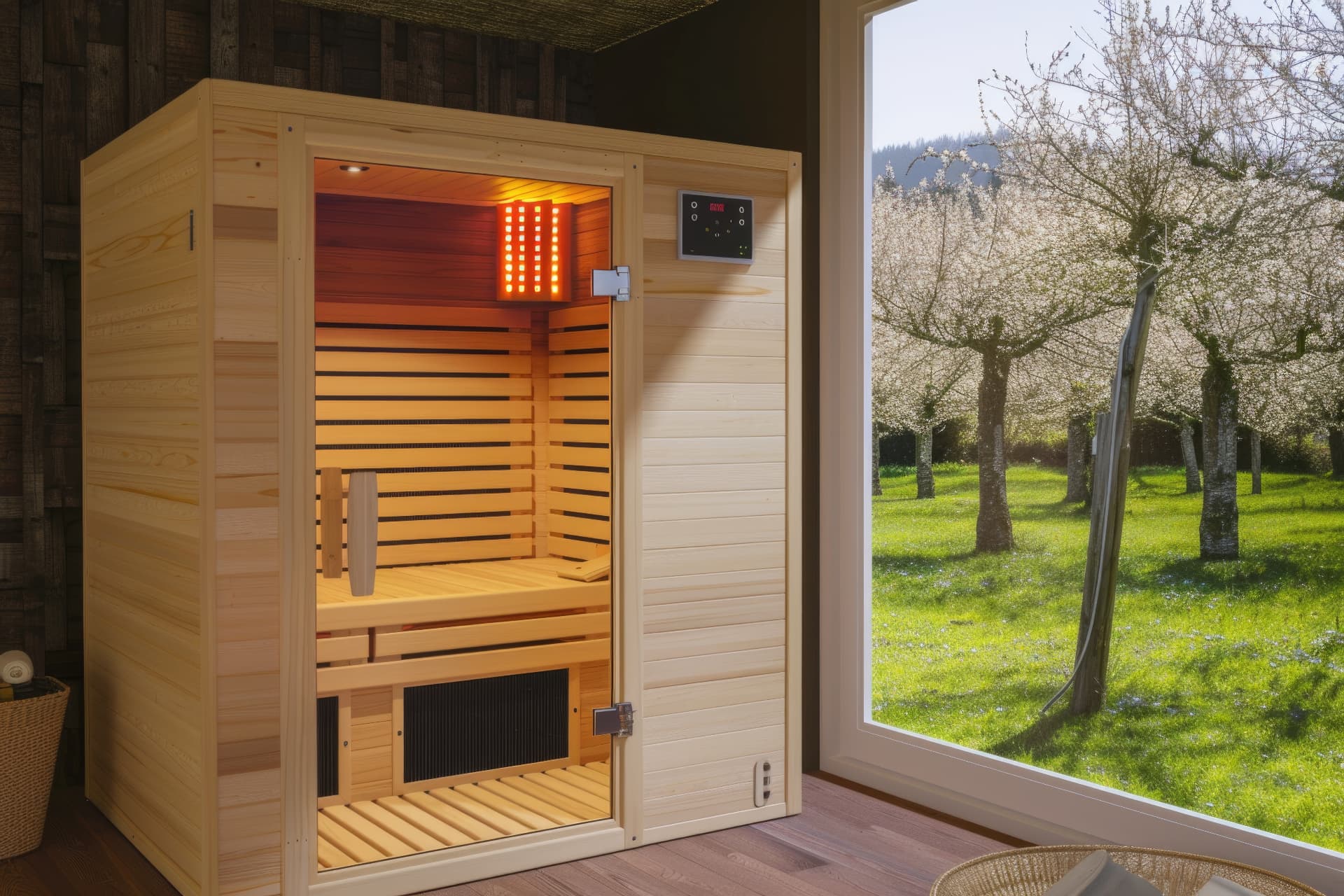
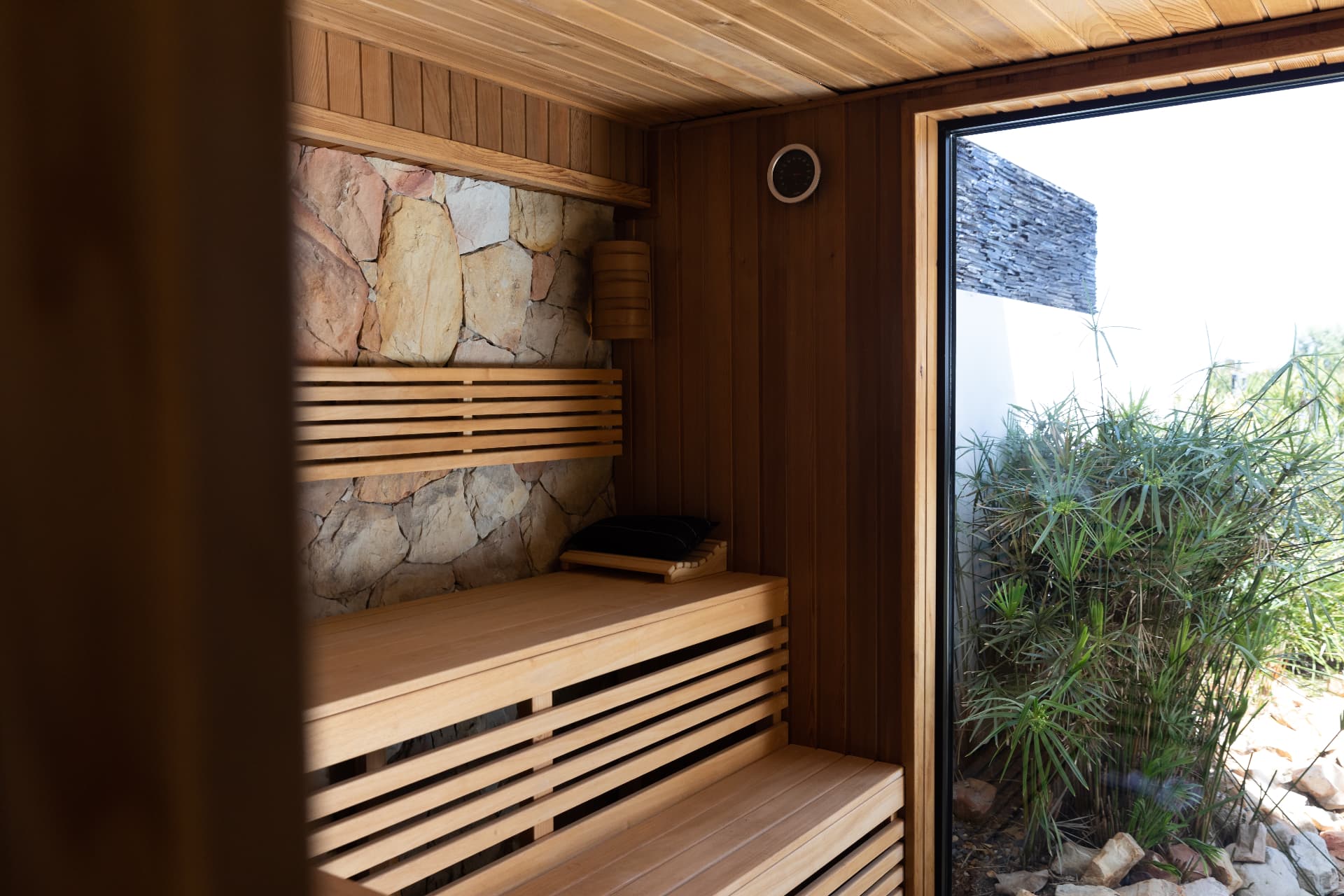
Outdoor saunas ask more of the build quality than indoor ones
An indoor unit is already sheltered by your home.
An outdoor sauna has no such protection.
Its exterior timber, roof detailing, seals, glazing, foundation and drainage all need to cope with direct exposure to rain, frost, temperature changes and persistent moisture.
That's why two outdoor saunas that look relatively similar online can sit at very different price points.
The difference isn't necessarily just branding or aesthetics. Construction details that aren't immediately obvious in photographs can have a significant impact on how well the sauna handles years outdoors.
When comparing outdoor models, look beyond the interior benches and timber finish.
Ask how the roof is constructed. Look at the base. Check the exterior treatment, insulation, door seals and warranty — and whether the sauna was genuinely designed for year-round outdoor installation.
Indoor saunas trade weatherproofing for ventilation and installation
Moving the sauna indoors removes much of the weather problem, but it introduces a different set of considerations.
Heat, ventilation, electrical requirements and the surrounding room all need to be planned properly.
The exact requirements will depend on the sauna type and manufacturer, but traditional indoor saunas in particular need appropriate ventilation and electrical provision. The surrounding materials and installation also need to be suitable for repeated exposure to heat and changing humidity levels.
Infrared saunas can sometimes be simpler to integrate into an existing room, although their installation requirements still vary by model.
This is why it's worth thinking about the room before choosing the sauna rather than trying to make the room work around a model you've already bought.
An indoor sauna can be beautifully simple once installed correctly.
The planning is what makes it feel simple.
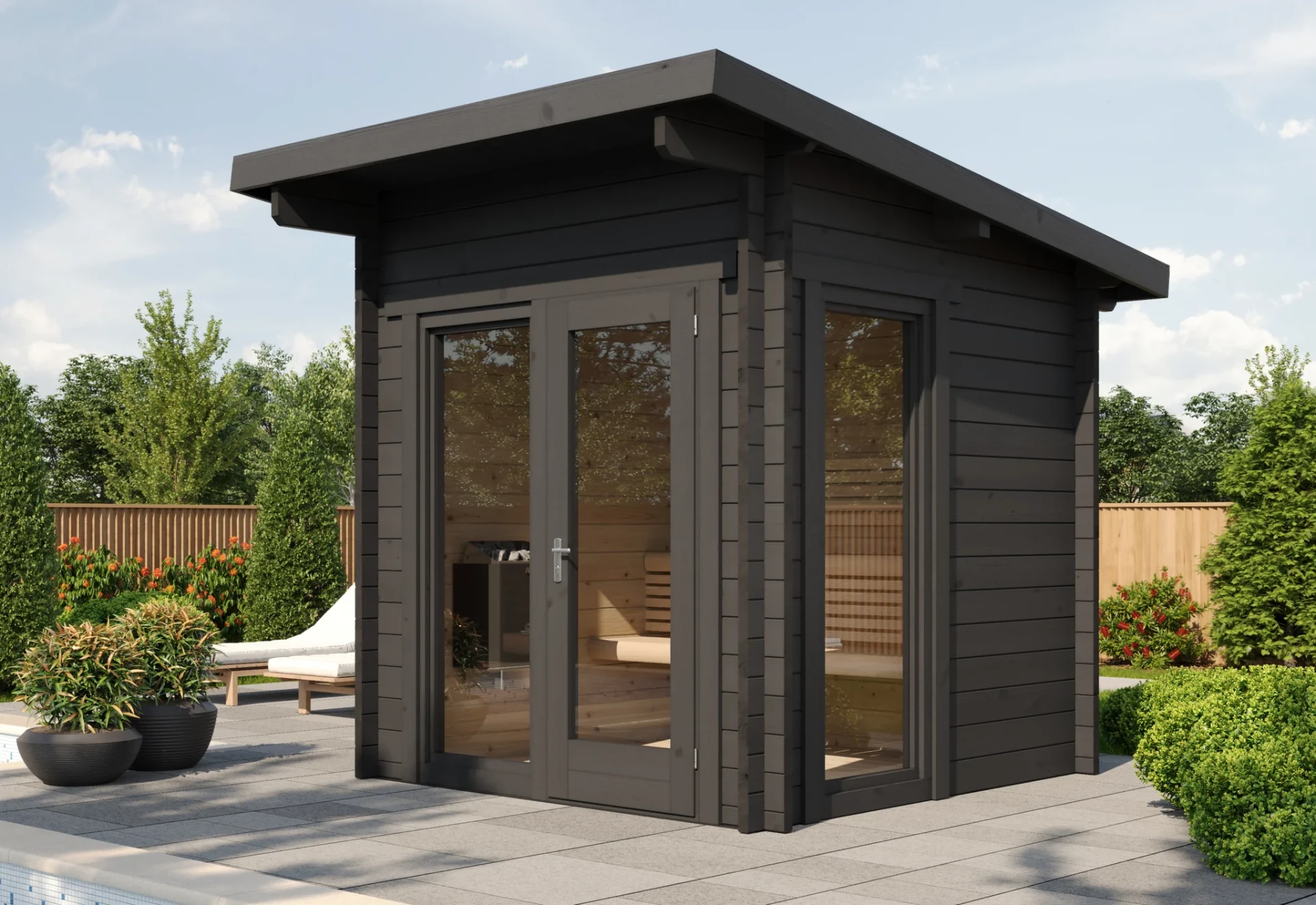
The part most people don't think about: will you actually walk to it?
An outdoor sauna sitting at the end of a landscaped garden can create something an indoor sauna rarely can: a genuine sense of leaving the house and entering a separate wellness space.
That separation can be part of the appeal.
Step outside. Walk through the garden. Enter the heat. Step back into cold air between rounds.
For someone who sees sauna as a slower ritual, that experience can be difficult to replicate indoors.
But convenience matters too.
On a dark, wet January evening, an indoor sauna a few steps from the bedroom or bathroom may feel considerably easier to use than a cabin at the other end of the garden.
Neither is inherently better.
They're simply built around different behaviours.
Before choosing, imagine using the sauna on the least appealing day of the year, not the most beautiful one.
Which one would you still walk into?
So which one is actually right?
There isn't a universally correct answer.
But there is a more useful question than indoor or outdoor?
Ask yourself:
Do I want sauna to be an effortless part of my everyday routine, or do I want it to feel like a destination?
Indoor saunas often make sense when convenience, regular use and integration into an existing bathroom, gym or wellness room are the priority.
Outdoor saunas make sense when the experience itself matters just as much — the garden setting, stepping into fresh air between rounds and creating a separate retreat away from the main house.
And for homes with the space, an outdoor sauna can become part of something larger: a garden wellness area combining heat, cold, water and relaxation rather than simply adding another piece of equipment.
The right decision isn't necessarily the sauna with the longest specification list.
It's the one whose location and experience fit the way you genuinely live.
Where to start
If you're still deciding between the two, comparing real indoor and outdoor models side by side is one of the easiest ways to understand the difference.
Steam & Oak
Explore indoor traditional, indoor infrared and outdoor sauna options.
Outdoor Living 365
Explore SaunaPlunge and outdoor sauna options designed for home and garden wellness.
The Reset House independently selects the brands and products we feature. Some links in this article are affiliate links, which means we may earn a commission if you make a purchase through them, at no additional cost to you.